
Tote Place Pool vs Fixed Odds — Which Place Bet Is Better?
 Available in US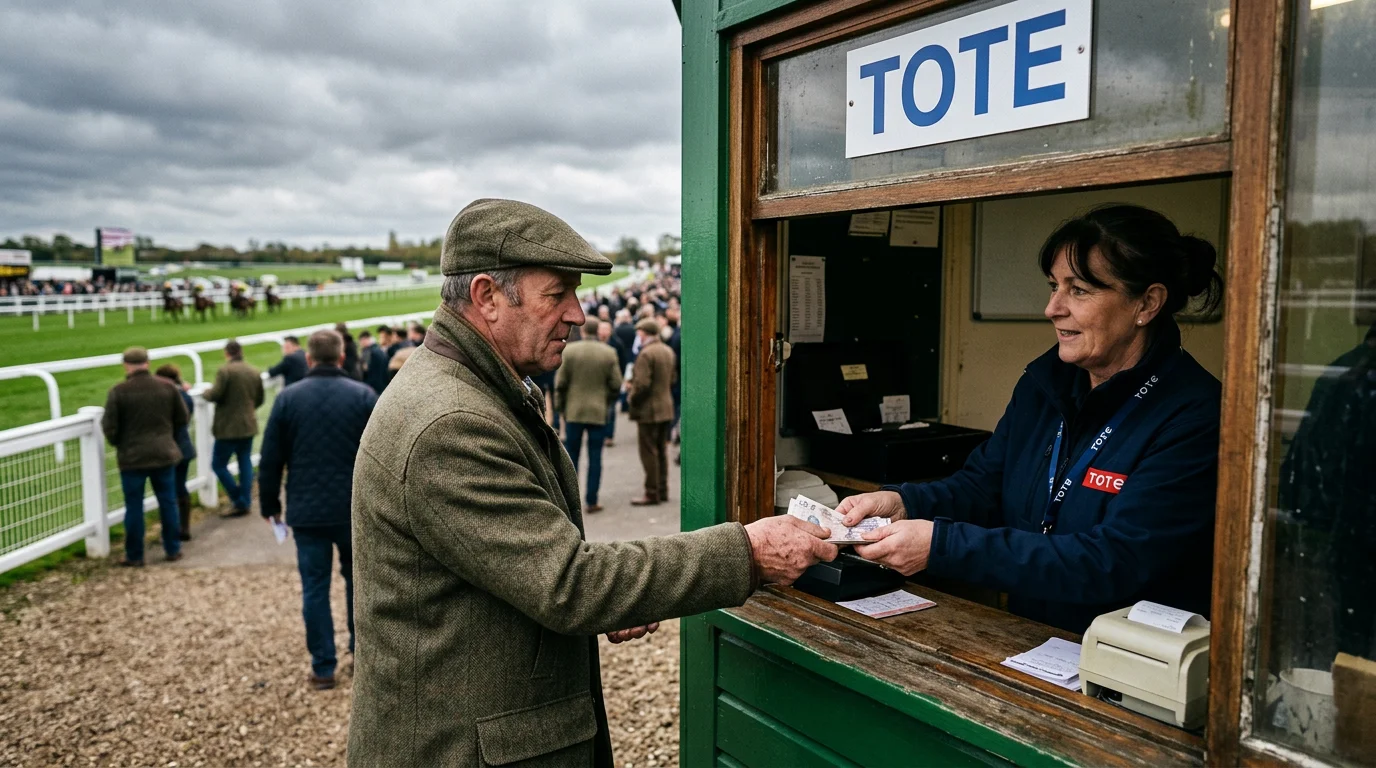
UK horse racing gives place bettors two fundamentally different ways to bet: fixed odds with a traditional bookmaker, or pool betting through the Tote. Both let you back a horse to finish in the places. Both pay out if your selection obliges. But the mechanics underneath — how prices are set, how payouts are calculated, and who you are really betting against — are entirely different, and those differences create situations where one option is clearly superior to the other.
Most bettors default to fixed odds without thinking about it, because that is what the betting slip shows them first. The Tote place pool sits a click or a window away, often overlooked, and that neglect is precisely what can make it valuable. When the crowd ignores a market, the prices in that market can drift away from the bookmaker’s tighter margins — and the informed bettor who notices collects the difference.
How Fixed Odds Place Bets Work
A fixed odds place bet does what the name suggests: the price is fixed at the moment you place the bet. You select a horse, the bookmaker offers place odds derived from the win odds and a place fraction (1/4 or 1/5 under standard UK terms), and those are the odds you get — regardless of what happens to the market between your bet and the off.
The appeal is predictability. Before you click confirm, you know exactly what you will receive if your horse places. A £10 place bet at 2/1 place odds returns £30. No surprises, no waiting for a dividend calculation after the race. The bookmaker bears the risk of getting the price wrong; you lock in certainty.
The downside is that fixed odds include the bookmaker’s margin — their overround. The sum of all implied probabilities in a fixed-odds market exceeds 100%, and that excess is the bookmaker’s profit margin. On the place side, this margin is built into the place fraction and the underlying win odds. You are, in effect, paying for the convenience of knowing your price upfront. For most races and most bettors, this trade-off is acceptable. But it means fixed odds place bets are structurally unlikely to offer the best possible return in every scenario.
Fixed odds are available at every online UK bookmaker, in every betting shop, and through most on-course bookmakers at the track. Availability is never an issue. The product is universal, liquid, and instant — three things the Tote cannot always match.
How the Tote Place Pool Works
The Tote operates on the pari-mutuel principle: all place bets on a given race go into a single pool. The Tote takes a deduction — currently around 18% on the place pool — to cover its operating costs and margin. The remainder is divided among everyone who backed a placed horse, in proportion to their stake relative to the total pool on that horse. The resulting payout is called the dividend, and it is only declared after the race has been run.
This is the critical difference. With fixed odds, you know your payout before the race. With the Tote, you do not. The dividend depends on how much money went into the pool, how it was distributed across the runners, and how many horses placed. If £10,000 goes into a place pool, approximately £1,800 is deducted by the Tote, and the remaining £8,200 is split among the winning bets. If most of the money was on the favourite and an outsider places, the dividend for that outsider’s backers can be disproportionately generous — because fewer people backed it.
Tote pool turnover on horse racing was approximately £78.2 million in the April 2021 to March 2022 period, according to Gambling Commission data. That figure is dwarfed by fixed-odds turnover, which reflects the reality that pool betting is a niche within UK horse racing, not the mainstream. Smaller pools can produce volatile dividends — both larger and smaller than you might expect. A thin pool on a midweek race at a minor track can generate wildly different payouts depending on whether one large stake arrives late, skewing the distribution.
The Tote place pool is available online through tote.co.uk, at on-course Tote windows at racecourses, and through selected bookmakers who act as Tote agents. On-course access is particularly relevant: the Tote has a physical presence at all 59 licensed UK racecourses, making it the default option for many racegoers who prefer not to haggle with a ring bookmaker.
Fixed Odds vs Tote Place — Side by Side
Laying the two options side by side makes the trade-offs concrete.
| Factor | Fixed Odds Place Bet | Tote Place Pool |
|---|---|---|
| Price known before race | Yes — locked at bet placement | No — dividend declared after the race |
| Bookmaker margin | Built into the overround | Fixed deduction (~18% on place pool) |
| Potential payout | Capped at the odds taken | Variable — can exceed or fall below fixed odds |
| Best scenario | Horse drifts after you bet (you got a better price) | Outsider places; most pool money was on favourites |
| Worst scenario | Horse shortens — SP would have paid more (unless BOG applies) | Favourite places; pool dividend is tiny |
| Availability | Universal — every bookmaker, online and in-shop | Tote website, on-course windows, selected agents |
| Cash Out | Available at most bookmakers | Not available |
The comparison reveals a pattern: fixed odds suit bettors who value certainty and flexibility, while the Tote place pool rewards those willing to accept uncertainty in exchange for occasional outsized payouts. Neither is universally better. The smart approach is to use both, choosing the option that fits the race in front of you rather than defaulting to one out of habit.
One often-missed detail: the Tote’s ~18% deduction on the place pool sounds comparable to a typical bookmaker overround of 10–20% on the win market. But the comparison is not apples to apples. The bookmaker’s margin on the place market specifically — which is a derivative of the win market — can be higher than the headline overround suggests. In practice, the Tote’s place deduction and the bookmaker’s effective place margin are often closer than they first appear, and on outsiders the Tote can come out ahead.
When the Tote Place Pool Offers Better Value
The Tote place pool outperforms fixed odds most reliably in one specific scenario: when an unpopular horse finishes in the places while the majority of pool money sits on short-priced favourites. In that situation, the dividend for the outsider’s backers can be significantly higher than the fixed odds that were available before the race, because the pool arithmetic heavily rewards the minority who backed against the crowd.
This happens more often than you might expect at well-attended meetings. With UK racecourse attendance hitting 5.031 million in 2025 — the first time above five million since 2019 — on-course Tote pools at major fixtures carry meaningful liquidity. At a Saturday feature meeting or a festival day, the place pool might hold £50,000 or more. If 70% of that pool is concentrated on two short-priced runners, the remaining 30% is spread thinly across the rest of the field. Any outsider that places collects from a pool that was effectively subsidised by the favourite backers.
Conversely, the Tote place pool is a poor choice when the likely placers are obvious and heavily backed. If a warm 6/4 favourite is almost certain to finish in the first three, most of the pool will sit on that horse, and the dividend for its backers will be compressed — often below what fixed odds would have paid. The Tote works against you when you are betting with the crowd and for you when you are betting against it. Recognising which side of that equation a given race falls on is the key skill for anyone using pool betting alongside fixed odds as part of a place-betting strategy.
Tote Place Pool vs Fixed Odds — More on this topic at place bet horse racing.
See also Best Odds Guaranteed Horse Racing UK.
