
Place Only Bet Horse Racing — When to Back to Place
 Available in US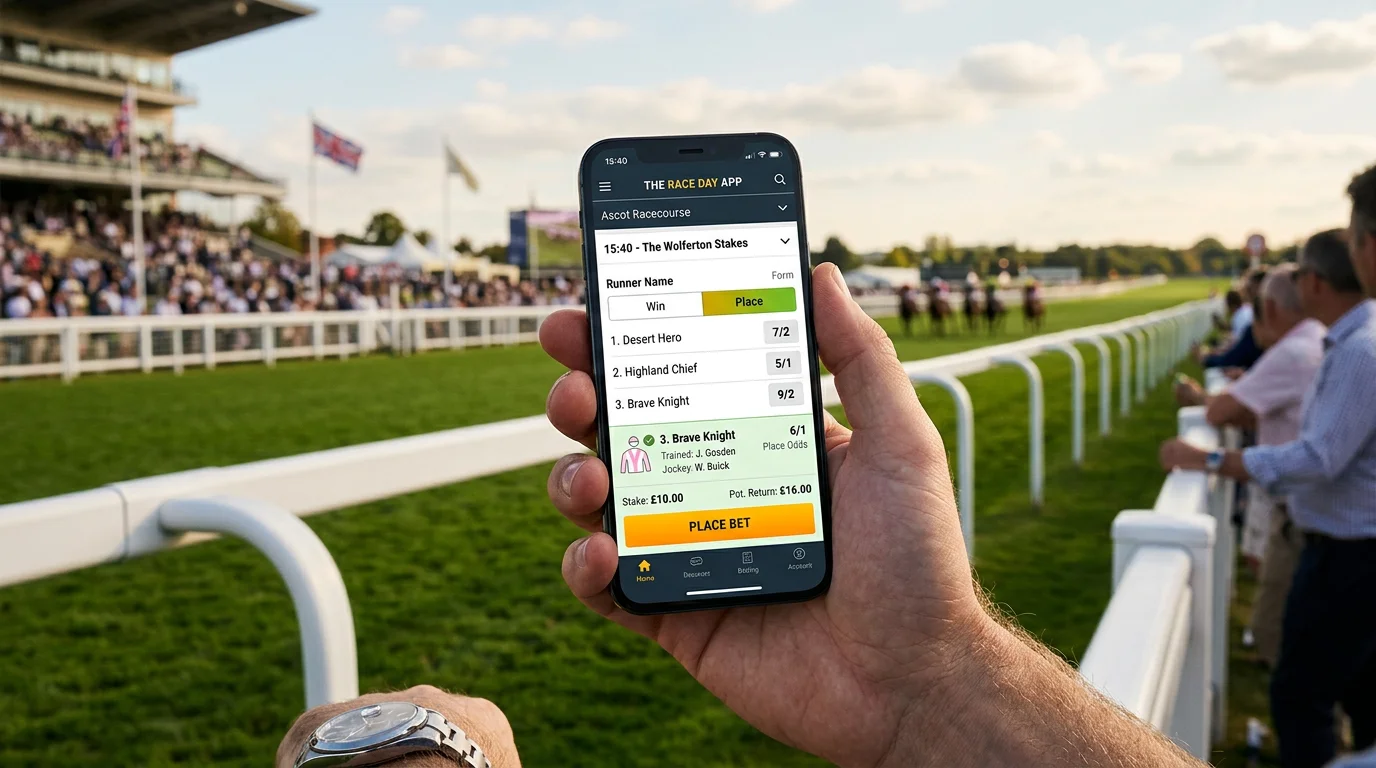
A place-only bet is exactly what it sounds like: a single stake on a horse to finish in the places, with no win component attached. You are not betting each-way, where half your money goes on the win and half on the place. You are putting all of it on the place outcome alone. The entire stake rides on your horse finishing in the top two, three, or four — depending on the number of runners and the race type — and nothing else.
This sounds obvious, yet it is one of the most underused bet types in UK horse racing. The default for most punters is each-way, which bundles a win bet with a place bet and doubles the total stake. For the right horse in the right race, stripping out the win component and concentrating your money on the place is a smarter allocation of your bankroll. Knowing when that is the case — and where to find the place-only market — separates the thoughtful bettor from the habitual each-way merchant.
Where to Find Place-Only Markets in the UK
Place-only betting is available through three main channels in the UK, each with different mechanics and pricing.
Traditional bookmakers offer place-only bets on most horse races, though the option is not always prominently displayed. On a bookmaker’s race card page, you will typically see the win odds front and centre, with place betting accessible via a dropdown or a secondary tab on the bet slip. The place odds are calculated using the standard formula: win odds multiplied by the place fraction (1/4 or 1/5). Some bookmakers, including bet365, offer a dedicated place betting section that makes the option more visible. The key is that you are placing a single stake, not a doubled each-way stake — your £10 is your total outlay.
Betting exchanges, most notably Betfair, operate a separate place market alongside the win market. This is a genuinely distinct market with its own odds, set by supply and demand rather than derived from the win price. Exchange place odds can differ significantly from the bookmaker’s calculated place price, sometimes offering better value, sometimes worse. The exchange place market is covered in more detail below.
The Tote Place Pool is a pool-based place-only product where all stakes go into a communal pool and the payout is determined by the dividend declared after the race. It is available online and at on-course Tote windows at all 59 UK racecourses, as documented in the BHA 2025 Racing Report. The Tote place pool offers no control over the price — you bet blind and discover the return after the result.
Place Only vs Each-Way — The Key Differences
The essential difference is the stake structure. An each-way bet at £10 costs you £20 total: £10 on the win, £10 on the place. A place-only bet at £10 costs you £10. For the same total budget, you can either back one horse each-way at £10 (costing £20) or back one horse place-only at £20 — putting twice the stake on the place outcome.
This matters because the two bets perform very differently depending on the result. If the horse wins, the each-way bet collects on both parts — a substantial return. The place-only bet also wins, but at the lower place odds rather than the full win odds. If the horse places but does not win, the each-way bet loses the £10 win stake and collects on the £10 place stake, netting a partial recovery. The place-only bet at £20 collects on the full amount at place odds — a larger absolute return than the each-way place part.
The comparison crystallises around one question: how likely is this horse to win versus how likely is it to place? Favourites in Jump racing win roughly 30% of the time, but Grand National favourites finish in the places around 58% of the time. That gap — 28 percentage points — represents the space where a place-only bet delivers better risk-adjusted returns than each-way. If you believe your horse is far more likely to place than to win, concentrating your stake on the place outcome rather than splitting it between win and place makes mathematical sense.
The trade-off is clear: you sacrifice the potential windfall of a win payout in exchange for more efficient deployment of your money on the outcome you consider most likely. For the horse that is a solid, consistent placer but lacks the turn of foot to win, place-only is the cleaner bet.
When a Place-Only Bet Makes Strategic Sense
Three scenarios consistently favour the place-only approach over each-way.
The first is the reliable placer in a big field. A horse with a form profile showing consistent placed finishes — second, third, fourth — but few wins is a textbook place-only candidate. In a handicap with 16 or more runners, where four places are paid at 1/4 odds, backing this type of horse to place concentrates your money on the outcome its form suggests it can deliver. Splitting the stake each-way wastes half on a win that the form says is unlikely.
The second is the short-priced favourite. If a horse is trading at 6/4 or shorter to win, the each-way place part returns very little — the place odds at 1/5 of 6/4 are just 3/10, meaning £13 back on a £10 place stake. The win part might land, but if you are focused on the place market, the returns at short prices are too thin to justify the doubled stake. A place-only bet at the same total budget allows you to use that money elsewhere or on a better-priced place candidate.
The third is the festival handicap at long odds. Average field sizes at Premier meetings were 11.02 on the Flat and 9.41 over Jumps in 2025, with the biggest handicaps pushing well beyond those averages. A 20/1 shot in a 24-runner Cheltenham handicap paying four places has a meaningful chance of placing. The place odds at 1/4 of 20/1 — that is, 5/1 — represent a genuine payout. An each-way bet doubles your exposure, but the win part at 20/1 is a longshot. If your analysis says “places but does not win,” the place-only route focuses your stake on the likeliest outcome.
Betting Exchange Place Markets — How They Differ
Betting exchanges like Betfair operate a separate place market that works differently from a bookmaker’s place odds. On an exchange, the place odds are not derived from the win odds using a fraction. They are set independently by bettors offering and accepting bets — a genuine market of supply and demand.
This has two practical consequences. First, exchange place odds can be better or worse than bookmaker place odds on the same horse. If a horse is heavily backed in the win market but less fancied for the place, the exchange place price might be more generous than the bookmaker’s calculated fraction. The reverse can also happen. Comparing the two before betting is the same principle as comparing odds between bookmakers — it takes a moment and occasionally pays handsomely.
Second, exchanges allow you to lay in the place market — betting against a horse placing. This is not available at traditional bookmakers. If you believe a horse is overrated for the places, you can lay it to place on the exchange and profit if it finishes outside the paid positions. Laying to place is a more advanced strategy, but it is the natural counterpart to backing to place, and the place market on exchanges provides the mechanism.
The main limitation is liquidity. Exchange place markets carry less money than win markets, particularly on smaller races. On a midweek card at a minor track, the place market might be too thin to get your full stake matched at a reasonable price. At major meetings — Cheltenham, Aintree, Royal Ascot — liquidity is usually sufficient for most bettors. As with many aspects of place betting, the big fixtures deliver the best conditions.
Place Only Bet Horse Racing — More on this topic at place bet horse racing.
See also How Many Places Paid in Horse Racing? UK Rules Explained.
