Best Odds Guaranteed Horse Racing UK — How BOG Works
 Available in US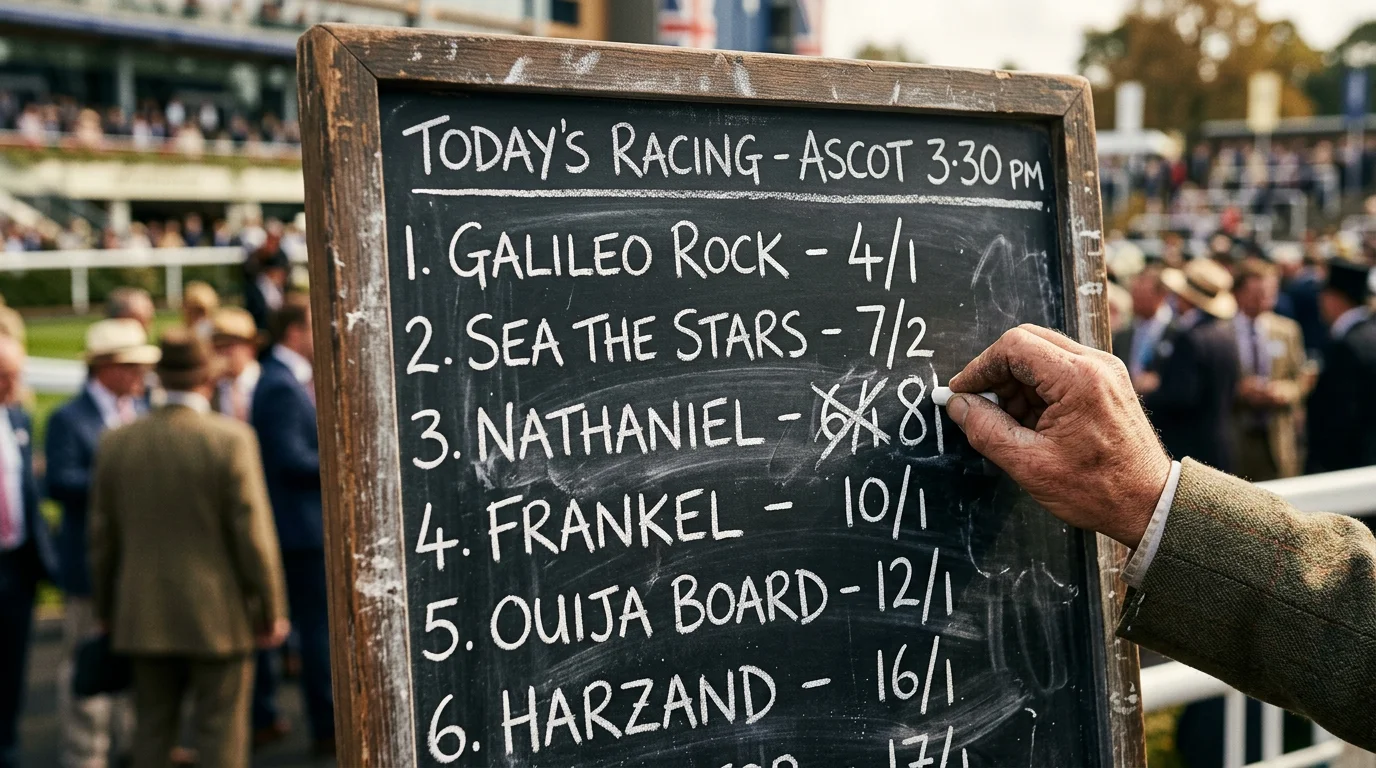
Best Odds Guaranteed is one of the few promotions in UK horse racing that consistently delivers real value rather than just marketing noise. The concept is simple: you take a price on a horse, and if the Starting Price at the off is higher than the price you took, the bookmaker pays you at the better price. You get the upside of price movement without the downside. For place bettors, who already operate on thinner margins than win bettors, this asymmetric protection can make a tangible difference to returns over a season.
BOG has become so widespread across major UK bookmakers that many bettors treat it as a default feature rather than a promotion. That complacency is risky. The terms, restrictions, and availability of Best Odds Guaranteed for horse racing vary between bookmakers and are under increasing commercial pressure. Understanding how it works, where it applies, and what the limitations are is the difference between using BOG strategically and assuming it is doing something it is not.
How Best Odds Guaranteed Works for Place Bets
The mechanics of BOG are straightforward. You back a horse at an early price — say 8/1 — on a race covered by the bookmaker’s Best Odds Guaranteed terms. The market moves during the day, and by the time the race starts, the Starting Price has drifted to 10/1. Under BOG, the bookmaker pays you at 10/1 instead of 8/1. If the SP had shortened to 6/1 instead, you keep your original 8/1. You always receive the better of the two prices.
For place bets, BOG applies to the place part of the payout. The place fraction (1/4 or 1/5) is applied to whichever set of win odds is higher — your early price or the SP. So if you took 8/1 and the SP drifts to 10/1, your place odds shift from 8/1 × 1/4 = 2/1 to 10/1 × 1/4 = 2.5/1. On a £10 stake, that is the difference between returning £30 and returning £35. The uplift is automatic and requires no action from you beyond placing the bet with a BOG-eligible bookmaker.
BOG typically activates on UK and Irish horse racing only, from the point that early prices are posted — usually the morning of the race — through to the off. Bets placed in-play or after the final market show are excluded. The feature is designed for pre-race betting, where price movement between your bet and the start is a genuine risk that BOG neutralises.
This matters in a market where average betting turnover per race has fallen 8% year on year, according to the HBLB Annual Report 2024/25. With less money flowing through the markets, individual price moves can be sharper, making BOG protection more valuable than it was in higher-liquidity periods. A horse that opens at 6/1 and drifts to 10/1 represents a significant market shift, and the BOG bettor captures the full benefit.
BOG Limitations You Need to Know
BOG is not unconditional, and the restrictions vary enough between bookmakers that checking the specific terms before relying on the feature is essential.
The most common limitation is a stake cap. Many bookmakers apply BOG only up to a certain stake — often £500 or £1,000 on the win part, with a proportional or lower limit on the place part. Beyond that threshold, your bet is settled at the price you took, regardless of SP movement. For casual bettors this rarely matters, but for anyone staking in three figures regularly, the cap is worth confirming.
Some bookmakers exclude specific race types from BOG. Early-price specials, enhanced odds offers, and price boosts are frequently excluded — the bookmaker has already extended a promotional price and will not compound it with BOG on top. Ante-post bets are almost always excluded, since they are placed long before the SP exists. A handful of operators restrict BOG to UK races only, excluding Irish fixtures; others include both. The variation between bookmakers is wide enough that the phrase “Best Odds Guaranteed” does not mean the same thing everywhere.
There is also the question of how long BOG will remain as generous as it is. As HBLB Chief Executive Alan Delmonte has put it, racing needs to ensure it is presented in a way that is attractive to the modern consumer. BOG has been a key tool for achieving that. But it is a cost to bookmakers — every SP upgrade is money the bookmaker would not otherwise have paid out — and in a period of margin pressure, that cost faces scrutiny. Bookmakers are already tightening eligibility rules in small ways: reducing stake caps, excluding more race types, limiting BOG to certain days. The direction of travel is toward less generous terms, not more.
Using BOG to Improve Place Bet Returns
The strategic value of BOG for place bettors is best understood as downside protection on early prices. When you take a morning price on a horse to place, two things can happen to the win odds: they shorten (your price was generous) or they drift (the market moves against your horse). Without BOG, you are stuck with whatever price you took. With BOG, drifting works in your favour — you get the higher SP — while shortening costs you nothing, because you still keep your original price.
This asymmetry encourages a specific approach: take early prices whenever BOG is available, particularly on horses you have identified through form analysis as likely placers. If the horse is strongly fancied by the market, the price may shorten by the off, and you will have captured a better price than the SP. If the horse drifts — perhaps due to money for a rival or a market overreaction — BOG ensures you collect at the SP, not your lower early price. Either way, you win.
The most productive application of this strategy is on mid-range prices between 4/1 and 12/1. At these odds, the difference between early price and SP can easily be a point or two, and the place fraction amplifies the effect. A 6/1 horse drifting to 8/1 with a 1/4 place fraction means your place odds move from 6/4 to 2/1 — a 33% increase in your payout. On shorter-priced horses (evens to 2/1), the SP drift tends to be smaller in absolute terms, and the benefit of BOG is proportionally less impactful.
The Future of BOG in UK Horse Racing
The biggest threat to BOG is fiscal. The UK government considered raising the tax on online betting from 15% to 21%, with the BHA warning such an increase could cost the industry £330 million over five years. Although the Chancellor kept racing’s rate at 15% in the November 2025 budget, the threat of future harmonisation has not disappeared. Promotional expenditures are the softest target for bookmakers looking to protect margins under higher taxation, and BOG — which operates as a standing cost that increases every time the SP moves against the bookmaker — would be among the first features scaled back or restricted further.
Already, the trend is visible in the details. Where once BOG applied broadly to all UK and Irish racing with minimal restrictions, several major operators have introduced time-based cutoffs (BOG only on bets placed before a certain hour), stake-based caps, and exclusions for specific meeting types. None of these changes have been dramatic individually, but the cumulative effect is a gradual erosion of a feature that bettors once took for granted.
For bettors, the practical response is to use BOG aggressively while it remains broadly available. Take early prices on place bets whenever BOG applies. Compare the BOG terms across your active bookmaker accounts — one may offer BOG on Irish racing where another does not, or one may have a higher stake cap. The feature still delivers genuine value today, but treating it as a permanent fixture would be optimistic given the commercial pressures the industry faces. Lock in the benefit now, and adapt when the terms inevitably tighten further.
Best Odds Guaranteed Horse Racing UK — More on this topic at place bet horse racing.
See also What Does Place Mean in Horse Racing? Simple Explanation.
