
On-Course Betting UK — How to Bet at the Racecourse
 Available in US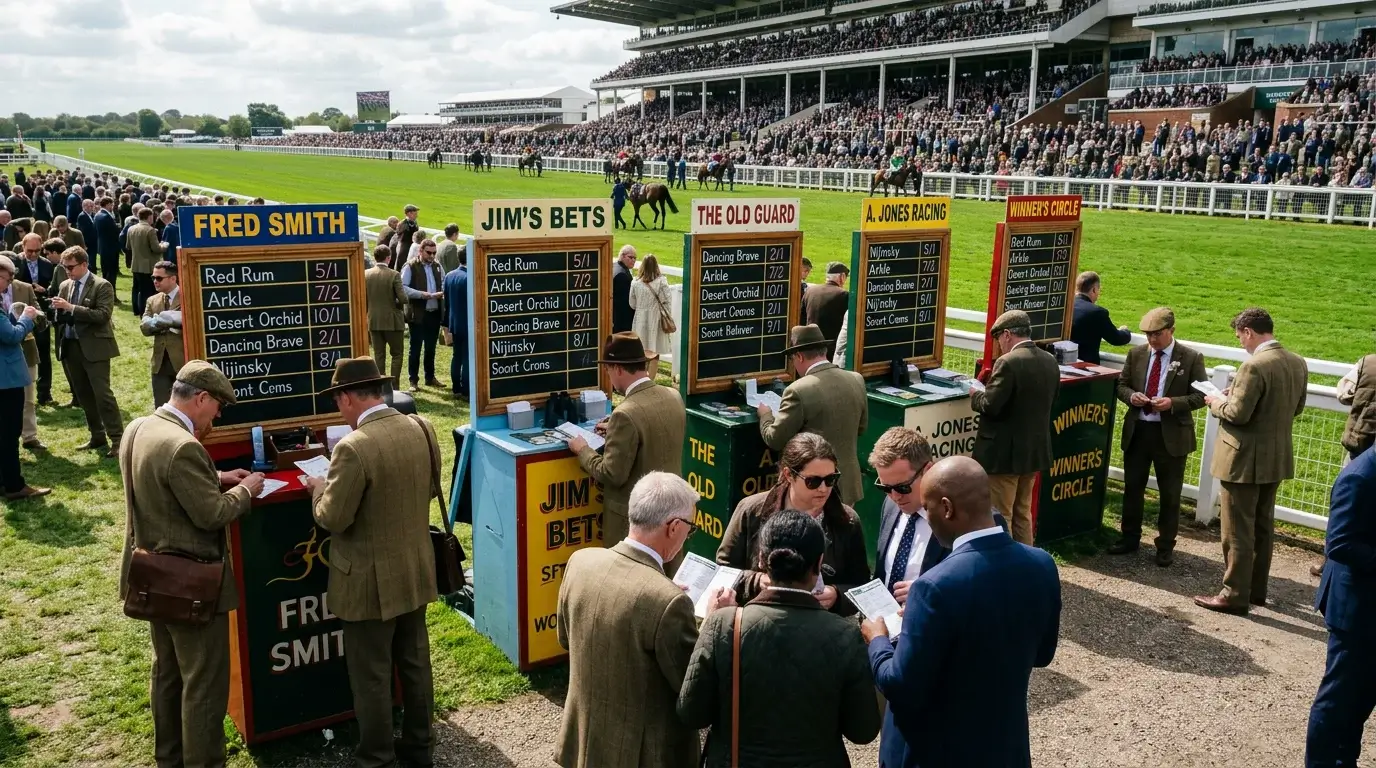
There is no betting experience in UK sport quite like standing in the ring at a racecourse, cash in hand, watching the boards tick over as the market moves in real time. Racecourse attendance hit 5.031 million in 2025 — the first time above five million since before the pandemic — and every one of those visitors had the option of betting on-course with a bookmaker, through the Tote, or simply on their phone while standing next to the parade ring. On-course betting at UK racecourses is different from online betting in ways that matter for place bettors: the pricing, the experience, and the available products all have their own character.
Whether you are a regular racegoer or planning your first visit, understanding how on-course betting works — and where it offers advantages or disadvantages compared to your phone — puts you in a better position to make good decisions on the day.
The Betting Ring — How On-Course Bookmakers Work
The betting ring is the physical marketplace at a racecourse where licensed bookmakers display their odds on boards and accept bets directly from racegoers. At larger tracks, the ring is divided into sections: the Rails bookmakers, who stand along the rails separating the Members’ enclosure from Tattersalls, and the Tattersalls ring bookmakers, who operate from their pitches in the main betting area.
On-course bookmakers set their own prices, independently of each other and independently of the online market. This is a genuine market — supply and demand, face to face. A bookmaker who takes a large bet on a specific horse will shorten that horse’s price on their board, and other bookmakers may follow. The process is visible, dynamic, and surprisingly transparent. You can watch the market form in real time by scanning the boards across the ring.
For place bets, on-course bookmakers apply the same Tattersalls Rule 3 terms as their online counterparts. The number of places paid and the place fraction (1/4 or 1/5) are determined by the number of runners and the race type, just as they are online. However, on-course bookmakers very rarely offer extra places or enhanced each-way terms — those promotions are the domain of online operators competing for digital attention. What on-course bookmakers may offer is a better Starting Price in certain situations, because the on-course market contributes directly to the formation of the official SP.
As BHA Director of Racing Richard Wayman noted when reflecting on 2025, there were many things to celebrate in terms of attendance figures, though he also cautioned that the horse population continues to decline and the betting environment remains challenging. The on-course betting ring is a beneficiary of that attendance growth — more people through the gates means more activity in the ring.
Tote Windows at the Racecourse
The Tote operates a physical presence at all 59 licensed UK racecourses, with dedicated windows where you can place pool bets including the Tote Place Pool, the Placepot, the Quadpot, and the standard Win and Place pools.
Placing a Tote bet on-course is simple: approach the window, state the race number, the horse number, the bet type (Place, Win, Placepot line), and your stake. The minimum stake on Tote pool bets is typically £1, though Placepot entries with multiple perms can quickly add up. You receive a paper ticket as your receipt, and after the race, winning tickets are cashed at the same windows.
The Tote Place Pool on-course operates identically to the online version. All stakes go into a common pool, the Tote takes its deduction (approximately 26%), and the remaining pool is divided among winning bettors. The dividend is declared after each race and displayed on screens around the course. Tote pool turnover on horse racing was approximately £78.2 million in the 2021/22 period, with on-course wagering contributing a meaningful share of that total, particularly at major festival meetings where footfall is highest.
On-Course vs Online — Comparing the Place Bet Experience
The two channels have distinct strengths, and the informed bettor uses whichever suits the race in front of them.
On-course advantages: Cash payouts with no withdrawal delays. The ability to see and compare prices across multiple bookmakers in the ring simultaneously. A contribution to the SP formation process — if you take a price with an on-course bookmaker, you are participating in the market that sets the Starting Price used for all bets settled at SP. And the visceral experience of watching your horse run while surrounded by thousands of people who are equally invested in the outcome.
Online advantages: Best Odds Guaranteed, which on-course bookmakers do not offer. Extra places promotions that extend the number of paid positions beyond the Tattersalls standard. Cash Out functionality, which lets you lock in a profit or cut a loss before the race finishes. And the convenience of placing a bet from anywhere — the bar, the grandstand, the paddock — without walking to the ring.
For place bettors specifically, the online channel holds a significant edge on promotions. Extra places and enhanced each-way terms are unavailable on-course, which means the online bettor has more paid positions to aim at on the same race. The on-course bettor compensates with potentially better prices in the ring and the immediacy of cash settlement, but the promotional gap is real and worth factoring into your race-day planning.
Tips for Your First Raceday Bet
If you are attending a UK racecourse for the first time and plan to bet, a few practical points will make the experience smoother.
Bring cash. On-course bookmakers in the ring operate on a cash basis. Some now accept card payments, but cash remains the default and avoids any issues with card reader failures or minimum transaction requirements. Tote windows accept cash universally.
Walk the ring before the first race. Look at three or four boards to get a sense of the prices available. On-course odds can differ between bookmakers by a meaningful margin — one might offer 6/1 where another shows 5/1 on the same horse. That comparison takes 30 seconds and can improve your return by 20% before you have done any form analysis.
If you are new to racing, a Tote Place Pool bet or a simple each-way bet with an on-course bookmaker is the most accessible starting point. Both require minimal knowledge — pick a horse, state your bet type and stake, and hand over the cash. The place element gives you multiple chances of collecting, which makes the experience more likely to produce a winner and more enjoyable as a result.
One practical detail: on-course bookmakers settle at Starting Price unless you take a fixed price with them before the race. If you want to lock in the odds displayed on their board, you must state the price when placing the bet — say “ten pounds each-way at six to one” rather than just “ten pounds each-way.” If you do not specify, the bet is recorded at SP, and the official Starting Price declared after the off will determine your returns. Sometimes SP is better than the board price, sometimes worse. Taking the price removes the uncertainty.
You do not need to understand the nuances of the form book to have a good day at the races. You just need to know the basics, manage your stake, and enjoy the spectacle. The betting ring, the Tote windows, and the phone in your pocket give you three distinct channels for placing your bets — more options than you will find in any other sporting environment in the UK.
On-Course Betting UK — More on this topic at place bet horse racing.
See also Horse Racing Form Guide.
