
Royal Ascot Place Betting — Terms, Tips & Strategy
 Available in US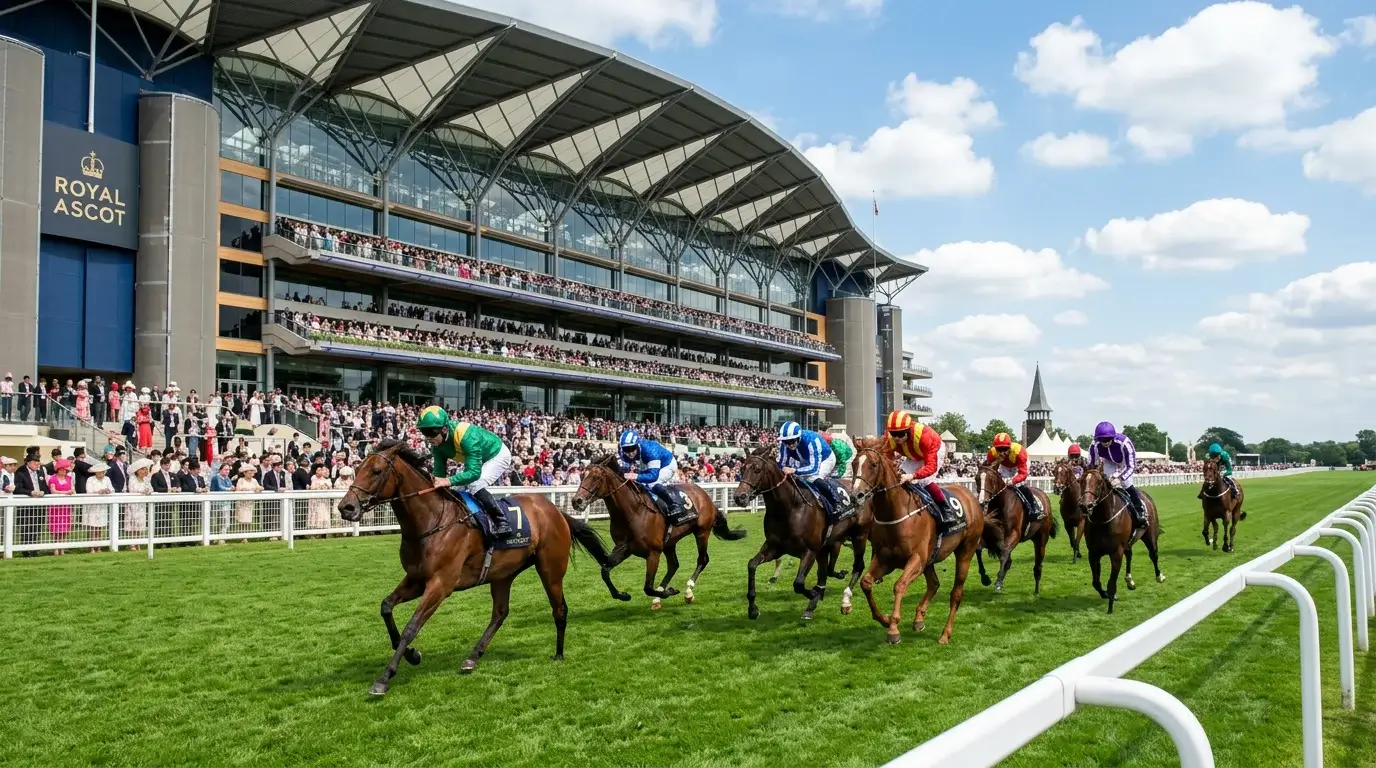
Royal Ascot is the pinnacle of the Flat racing season and, for place bettors, the five-day meeting in June that delivers the largest fields, the most generous place terms, and the richest bookmaker promotions of any Flat fixture on the calendar. Thirty-five races across five days, mixing the world’s best racehorses in elite Group 1 contests with enormous fields in the Heritage Handicaps that have become some of UK racing’s most bet-upon events. Prize money reached a record £194.7 million across all UK racing in 2025, and Ascot’s purses sit at the top of that pile.
For place bettors, Royal Ascot splits into two distinct opportunities: the Group races, where smaller fields and high class produce predictable place outcomes at thin odds, and the big-field handicaps, where 20 or more runners contest the places at generous fractions with extra places promotions layered on top. Knowing which races to target — and how the unique characteristics of Ascot’s course shape the place betting landscape — is what separates the informed bettor from the casual racegoer.
Royal Ascot Place Terms by Race Type
The place terms at Royal Ascot are governed by the same Tattersalls rules as every UK meeting, but the composition of the card means a wider spread of tiers than most fixtures.
Group 1, 2, and 3 races typically attract 8 to 16 runners. As non-handicap events, they pay three places at 1/5 odds under standard terms. The Gold Cup, the King’s Stand Stakes, the Queen Anne — these are the headline races, but from a place-betting perspective they offer the less generous fraction. The quality of the fields means the first three home are often the most fancied runners, and the place odds are correspondingly short. A 3/1 favourite at 1/5 place odds returns just 3/5 on the place part — a modest payout for a bet that requires your horse to finish in the top three of a competitive Group 1.
Heritage Handicaps are where Royal Ascot’s place-betting value concentrates. The Royal Hunt Cup, the Wokingham Stakes, the Buckingham Palace Stakes, and the Britannia Stakes routinely attract fields of 20 to 30 runners. At 16 or more runners in a handicap, the standard terms pay four places at 1/4 odds. With bookmaker extra places extending that to five, six, or seven, the coverage available on a Royal Hunt Cup with 28 runners is extraordinary.
The record prize money fund in 2025 ensures that the Heritage Handicaps attract the best-quality fields of any handicap racing in Britain. This depth of field translates directly to competitive finishes and place outcomes that are genuinely difficult to predict — exactly the conditions under which the 1/4 fraction and extra places offer the most value to the bettor.
Big-Field Handicaps — Where Place Betting Thrives
The Heritage Handicaps are the beating heart of place betting at Royal Ascot. The numbers tell the story.
Premier Flat races averaged 11.02 runners in 2025, but the big Ascot handicaps comfortably exceed that average. The Royal Hunt Cup regularly fields 25 or more runners across a mile on the straight course. The Wokingham, a six-furlong sprint handicap, attracts similarly large fields. The Buckingham Palace Stakes, restored to the programme in recent years, has quickly established itself as another big-field fixture. Each of these races triggers the 16+ handicap tier: four places at 1/4 odds as standard, with promotional extensions readily available.
The straight course at Ascot — used for races up to a mile — introduces a variable that does not exist at many other tracks: draw bias. Depending on the ground conditions and where the fresh strip of turf lies, horses drawn high or low can gain a measurable advantage. In a 28-runner handicap, the draw can determine whether a horse gets a clean run or is stuck behind a wall of rivals. For place bettors, factoring in the draw is essential on straight-course races. A well-drawn horse at 16/1 might be a genuine place contender; the same horse from a poor draw might struggle to get competitive.
The round course, used for races over a mile and a quarter and beyond, reduces the draw impact but introduces other factors: the ability to handle the undulations, the Swinley Bottom dip, and the stamina test of the uphill finish. Place candidates on the round course tend to be horses with proven form over the course and distance — the C and CD markers in the form guide that signal familiarity with Ascot’s specific demands.
Royal Ascot Place Betting Strategy
A productive Ascot place-betting strategy sorts the card into two buckets and applies a different approach to each.
For the Group races, the approach is selective and conservative. The fields are smaller, the fractions less generous, and the market is sharp enough that the obvious place candidates are priced accordingly. The value, if it exists, lies in identifying a horse at 8/1 or longer that has a realistic chance of finishing in the first three — typically a horse returning from an absence with a strong back-catalogue of Group form, or an international raider whose form has been underestimated by the UK market.
For the Heritage Handicaps, the approach is broader and bolder. Four places at 1/4 odds — potentially extended to six or seven — across a field of 25 or more runners means the strike zone is wide. Horses in the 12/1 to 25/1 range are viable place contenders in these races, and the place payout at those odds is substantial. A 20/1 shot at 1/4 place odds returns 5/1 — a rewarding payout for a horse that did not need to win, just finish in the upper fraction of a large field.
As HBLB Chief Executive Alan Delmonte observed, certain months see bookmakers’ gross profits running well above recent norms, with festival results particularly favourable for the layers. Royal Ascot is one of those festivals. The bookmakers know their margins are tested by big-field handicaps, which is precisely why they compete on extra places during the meeting — to attract the volume that offsets the liability. The place bettor who shops for the best terms captures the benefit of that competitive pressure.
Extra Places Offers at Royal Ascot
Royal Ascot’s Heritage Handicaps are among the most heavily promoted races of the Flat season. Bookmakers routinely offer five, six, or seven places on the Royal Hunt Cup and the Wokingham, and similar extensions on the Buckingham Palace and the Britannia. The promotions appear in the days leading up to the meeting and are typically confirmed on race morning.
The value of extra places at Ascot is amplified by the field sizes. A seven-place offer on a 28-runner race means your horse needs to finish in the top 25% of the field — a target that is genuinely achievable for any runner with a realistic handicap mark and a clean run. Compare that to a three-place offer on a 10-runner Group 1, where the top 30% qualify but the fraction is 1/5 instead of 1/4. The handicap extra places offer is superior on both coverage and fraction.
The practical routine is the same as for any festival: compare offers across at least three bookmakers on the morning of each day’s racing. One operator might offer six places on the Royal Hunt Cup where another offers seven. The difference is one extra qualifying position — one more chance of your horse collecting — at no additional cost. During Royal Ascot week, this comparison takes two minutes per race and represents the highest return on effort available to any place bettor.
Royal Ascot Place Betting — More on this topic at place bet horse racing.
See also Responsible Gambling Horse Racing UK.
